
UDS toolset
Low-level access to the services an engineer reaches for when the project tables are not enough. Every request and response is written to the session log with >> and <<.
Services
| Service | SID | What the panel does |
|---|---|---|
| Diagnostic session control | 0x10 | SET 03 sets extended session; SL selects the session number; Set Session sends it |
| ECU reset | 0x11 | Soft Reset, Hard Reset, Key On/Off Reset |
| Security access | 0x27 | AL selects the level; Get Seed, Send Key, Authorize |
| Tester present | 0x3E | Period and Send tester present send 3E 80 periodically |
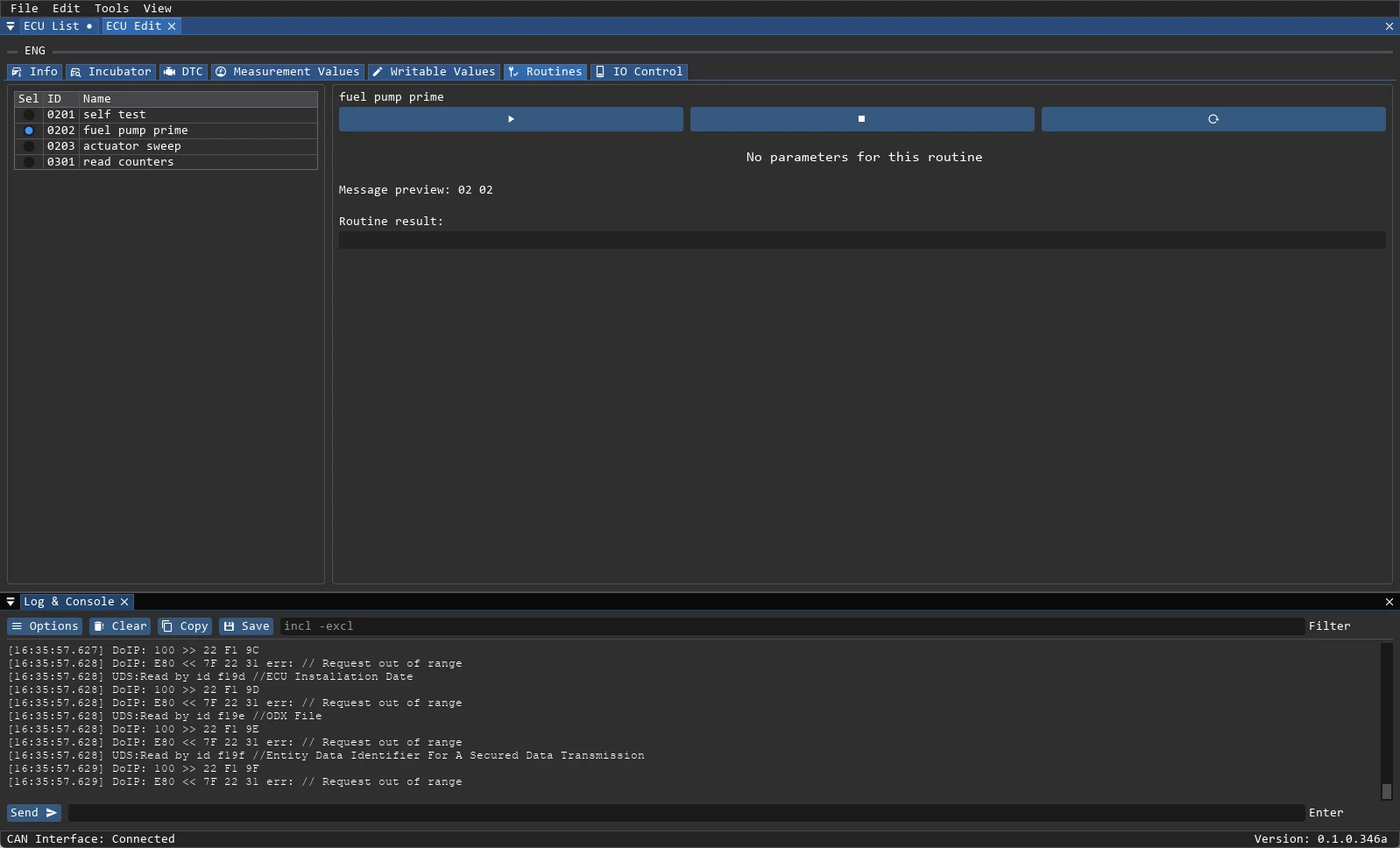
| Routine control | 0x31 | Start, stop and request result, limited by the routine flags |
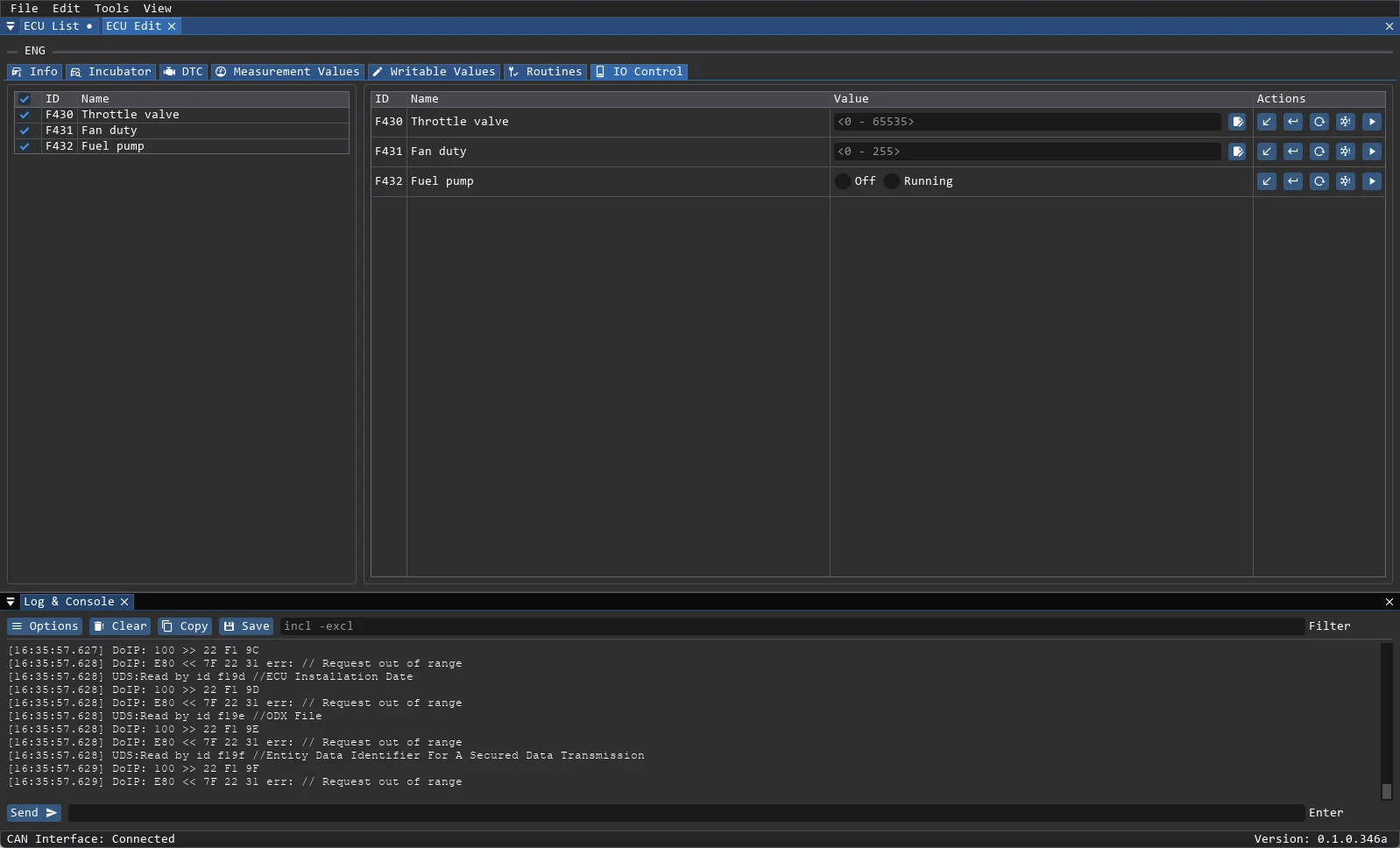
| IO control | 0x2F | Return control or adjust an input/output |
| Read memory | 0x23 | Read a block by ALFID, address, size and block size |
| Write memory | 0x3D | Write a block by ALFID, address, size and block size |
DID reads and writes use 0x22 and 0x2E; the parameter editor and scripts call the same transport underneath.
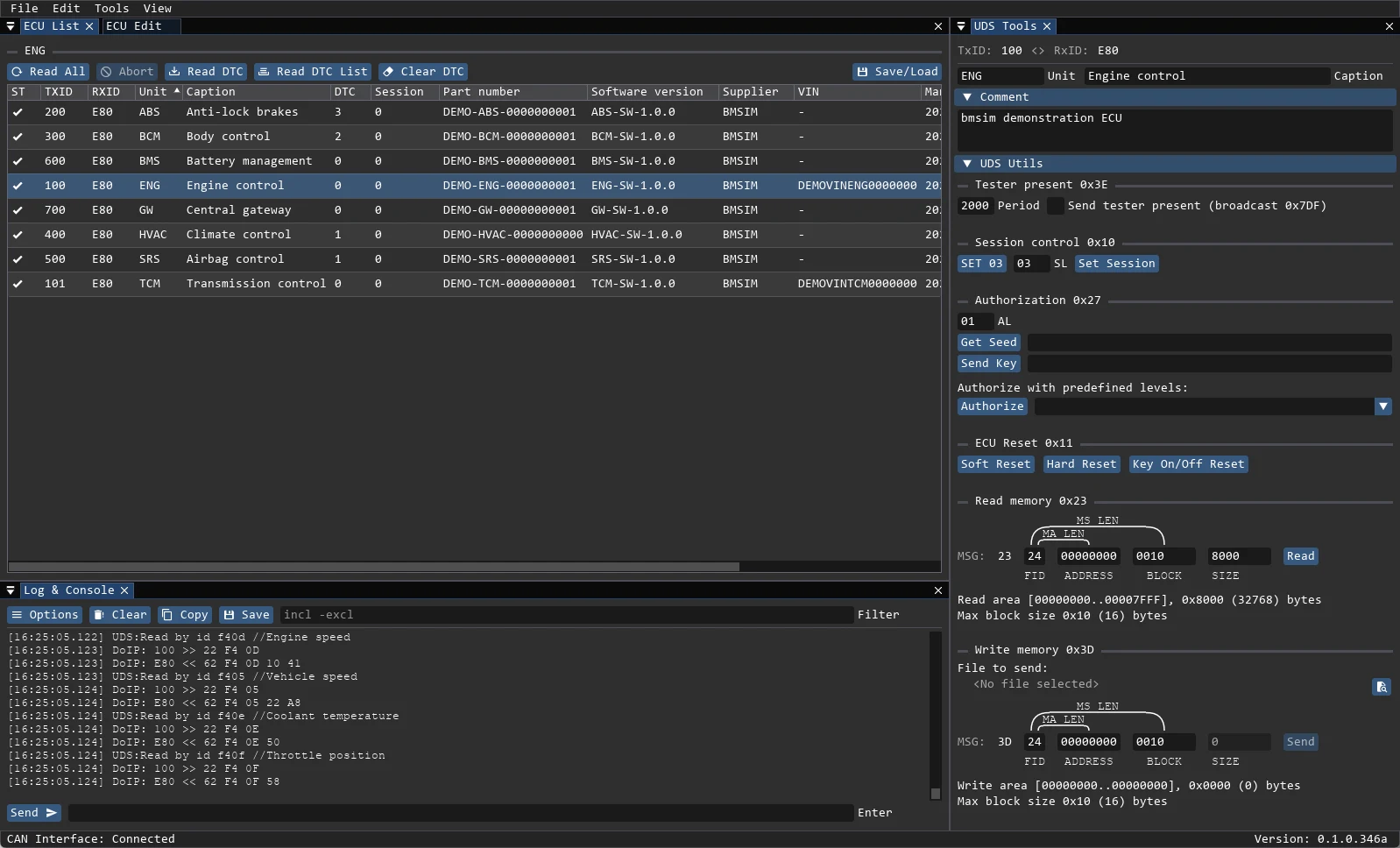
Security access
- Get Seed requests the seed for level
AL; Send Key sends the key you computed. - Authorize runs the configured Seed2Key DLL for the selected level, end to end.
- Auth levels and their DLL exports are defined per ECU in the project. The DLL must be reachable from
data/auth/. - A rejected key is logged with the negative response code; the session stays open so you can retry.
Memory access
- Reading returns the raw payload and the reported block size; large ranges are split into blocks. The read result can be saved to a
.binfile. - Writing accepts a file plus ALFID, start address, size and block size.
- Memory access is not a substitute for a flashing recipe: address layout and checksums are ECU-specific.
Routines and IO control
The Routines and IO Control tabs of ECU Edit expose the same services with project-defined identifiers and parameters:
- A routine shows start, stop and result actions only when its flags allow it:
could_start,could_stop,could_request_result. Input data comes from the routineoptions. - IO control belongs to the
ioctlgroup. A parameter withwriteable: trueis available both here (0x2F) and in Writable Values (0x2E). - IO and routine operations ask for confirmation when the safety policy requires it.
These services change ECU state. Always confirm the session, the security level and the target ECU before sending a request.